When Gian Piero Gasperini arrived at Atalanta in 2016, the club was a perennial relegation battler. By 2024, they had won the Europa League and become a Champions League regular. That transformation is not a fluke—it's the product of a distinct footballing ideology. Gasperini's man-marking system。deployed with ferocious intensity, has turned a modest provincial side into a tactical laboratory that bigger clubs now study. I watched Atalanta dismantle Liverpool at Anfield in 2020, and the audacity of their high line stuck with me. They didn't park the bus;they pressed a Premier League champion into submission.The hallmark of Gasperini's approach is zonal marking in midfield but man-oriented pressing at the back. Defenders follow strikers everywhere, even into wide areas。
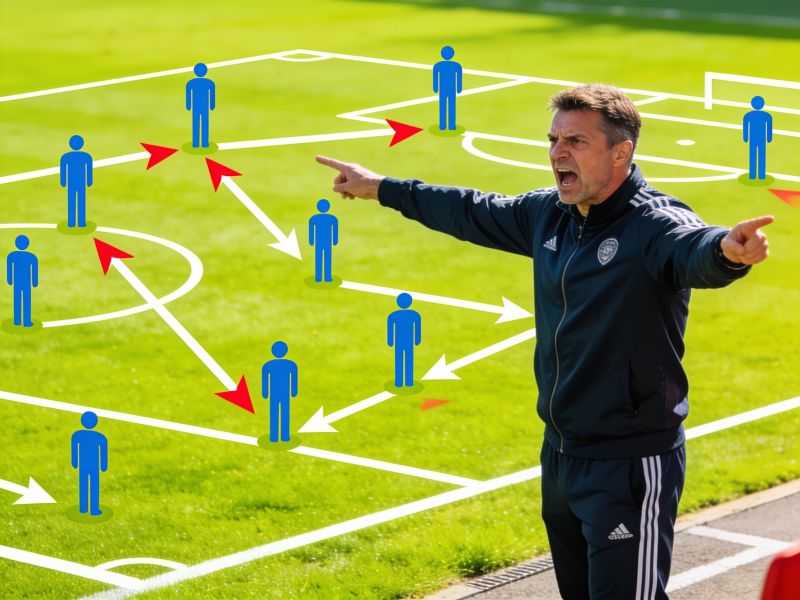
creating chaotic 1v1 duels across the pitch. Critics call it suicidal against elite dribblers. Yet Gasperini has refined it: the back three shifts as a unit, and the wing-backs tuck in to form a temporary back five when possession is lost. This isn't naive idealism—it's a calculated risk that generates turnovers high up the pitch. Atalanta's xG from high turnovers consistently ranks among Serie A's top three. The system demands extraordinary physical output;Gasperini's training regimen includes double sessions and grueling shuttle runs. Players either adapt or leave. Papu Gómez thrived, then fell out;Ademola Lookman arrived as a journeyman and became a Europa League final hat-trick hero. Gasperini's man-management is binary—total trust or cold exile. That bluntness has cost him relationships, but it has also forged a squad with zero tactical ambiguity.What separates Gasperini from other ideologues is his pragmatism in the transfer market. Atalanta's budget is a fraction of Juventus's or Inter's. Gasperini scouts undervalued profiles: Rasmus Højlund from Sturm Graz, Teun Koopmeiners from AZ。Éderson from Corinthians. He doesn't buy finished products;he buys runners with tactical intelligence. The club's scouting network, aligned with Gasperini's specifications, identifies players who can cover ground and accept coaching. This model has produced a net transfer surplus of over €200 million since 2017. Gasperini once said, 'I don't want champions;I want players who become champions here.' That ethos explains why Atalanta's stars often struggle elsewhere—the system amplifies their strengths and hides their weaknesses. Josip Iličić flopped at Fiorentina but became a maestro in Bergamo. The Gasperini effect is real, and it's portable only if the entire structure follows.Not every experiment works. Gasperini's brief tenure at Inter in 2011 lasted five matches—he tried to impose his 3-4-3 on a squad built for defensive solidity, and the dressing room revolted. That failure left a scar. When he arrived at Atalanta, he adapted: the back three became more compact, the pressing triggers more selective. He also learned to delegate—his assistant, Tullio Gritti, handles set-piece drills with obsessive detail. Gasperini's touchline demeanor remains volcanic;
he argues with fourth officials。kicks water bottles, and once called a journalist's question 'stupid.' That raw edge is part of his charm. Players describe him as demanding but honest. 'He tells you exactly why you're not playing,' Lookman said in an interview. 'No politics.' In an era of bland corporate coaching, Gasperini's confrontational authenticity feels like a relic—and a weapon.The next challenge is sustainability. Atalanta's stadium。the Gewiss Stadium, is undergoing renovation, and the club's wage bill is rising. Gasperini is 66;
succession planning looms. He has hinted at retirement but also signed extensions. The tactical blueprint—man-marking, vertical transitions, relentless pressing—has influenced a generation of Italian coaches, from Thiago Motta to Raffaele Palladino. Yet Gasperini's personal imprint is so heavy that copying him without his intensity often fails. Atalanta's Europa League triumph in 2024, capped by a 3-0 win over Bayer Leverkusen's unbeaten machine, was a validation of his stubbornness. Gasperini wept on the touchline. It was the first major trophy in the club's 117-year history. For a coach once mocked as a Serie B specialist, that night in Dublin silenced every doubter. The Gasperini era is not just a story of overachievement—it's a case study in how one man's uncompromising vision can bend an entire league's tactical orthodoxy.