
Riccardo Montolivo never chased the spotlight. Watch any Fiorentina match from 2005 to 2012 and you'll see him—always a step ahead, head up, scanning. He wasn't the guy bursting past three defenders or smashing volleys from thirty yards. Montolivo dictated tempo. His game was built on angles, positioning, and that rare ability to make a five-yard pass feel like a tactical masterstroke. I remember a Champions League night against Liverpool in 2009. Montolivo completed 94 passes。most of them under pressure. No goals, no assists. Yet the entire rhythm of Fiorentina's 2-0 win flowed through him. That's the Montolivo story in miniature: influence without noise.Critics often labeled him too passive. Italian pundits craved a regista who sprayed forty-yard diagonals like Pirlo. Montolivo didn't do that. He kept the ball moving, yes, but with a horizontal slant—shifting the point of attack, pulling opponents out of shape. Cesare Prandelli understood this. When he took over the national team in 2010。Prandelli made Montolivo a cornerstone. At Euro 2012, Montolivo started five of Italy's six matches. His performance against England in the quarterfinal was a masterclass in pressing resistance: 78 touches, 91% pass accuracy, and a relentless willingness to receive the ball in tight central zones. Andrea Pirlo got the headlines. Montolivo did the dirty work beside him.Injury derailed his Milan years. A broken leg in 2014 cost him the World Cup and, arguably, his peak. Before that, Montolivo had been quietly excellent for Milan—not spectacular, but dependable. He captained the side from 2015 to 2017, a period of chaos and managerial turnover. Montolivo's leadership wasn't vocal. Teammates described him as reserved, almost introverted. Yet on the pitch, he organized. He pointed。gestured, repositioned. That kind of leadership doesn't trend on social media. It wins matches. His absence through injury in 2016-17 coincided with Milan's worst midfield stretch in a decade. Coincidence?
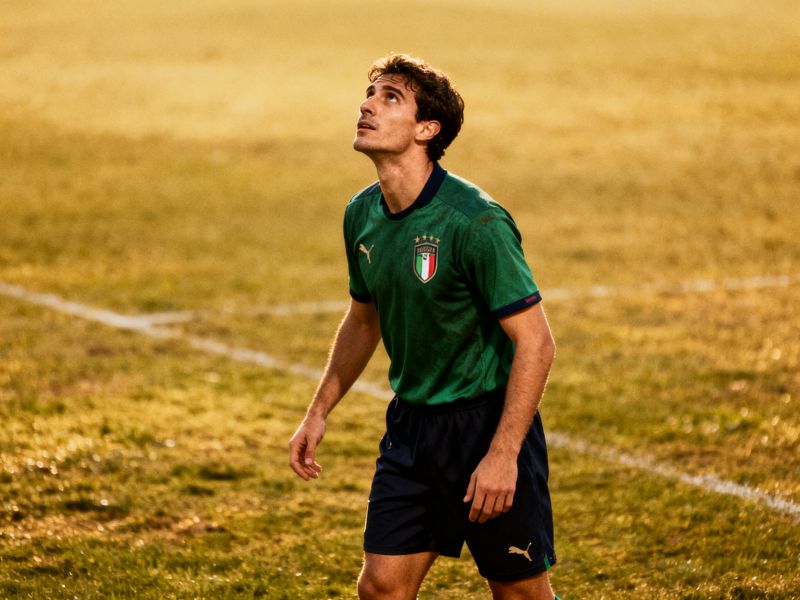
I don't think so.What made Montolivo special was his cognitive speed. He processed the game faster than most. Watch old footage: he checks his shoulders before receiving the ball。sometimes three or four times in five seconds. That habit—so basic, so underrated—allowed him to release pressure instantly. He wasn't a physical specimen. At 1.81 meters and roughly 75 kilograms。he lacked the burst of a box-to-box engine. But his first touch bought him half a yard, and that half-yard was enough. Montolivo's career stats—over 400 Serie A appearances, 66 caps for Italy, three major tournaments—don't scream legend. They whisper consistency. In an era obsessed with highlight reels, Montolivo reminds us that midfield control is often invisible until it's gone.
He retired in 2019 after a brief spell with Fiorentina, returning to the club where it all began. No farewell tour, no emotional press conference. Just a quiet exit. Fitting, really. Montolivo never demanded attention. He just made the players around him better. That's a legacy worth remembering—even if the man himself would rather you didn't make a fuss.